
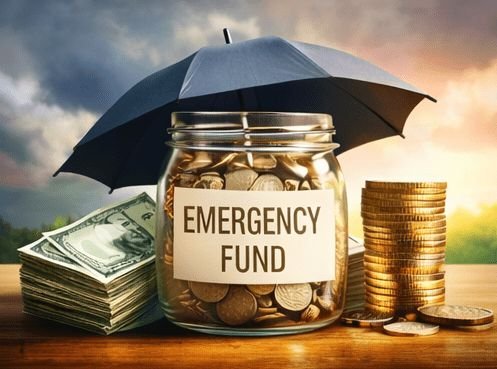
Unexpected expenses can happen at any time. Your car may need a major repair, your laptop could stop working, you might face an unexpected medical bill, or your income could temporarily drop.
Without savings, even a relatively small emergency can force you to use a credit card, borrow money, or take on debt.
That is where an emergency fund can help.
An emergency fund is money set aside specifically for unexpected and necessary expenses. It is not meant for vacations, shopping, entertainment, or planned purchases. Its purpose is to give you a financial cushion when life does not go according to plan.
The good news is that you do not need thousands of dollars to get started. You can build an emergency fund from zero by starting small, saving consistently, and gradually increasing your target.
This guide explains how to build an emergency fund step by step, even if your income is limited.
What Is an Emergency Fund?
An emergency fund is a separate pool of money reserved for genuine financial emergencies.
Examples include:
- Unexpected medical expenses
- Urgent car or home repairs
- Temporary loss of income
- Essential appliance replacement
- Emergency travel
- Unexpected bills that cannot reasonably be postponed
The key difference is unexpected and necessary.
Buying a new phone because you want an upgrade is not normally an emergency. Replacing a broken phone that you need for work may be a different situation.
Your emergency fund gives you an alternative to immediately relying on credit cards or loans when something unexpected happens.
Why Is an Emergency Fund Important?
An emergency fund can provide more than financial protection. It can also reduce stress when unexpected expenses appear.
Imagine that your monthly income is $2,500 and you suddenly receive a $700 emergency expense.
Without savings, you may need to borrow the money or put the expense on a credit card.
With an emergency fund, you may be able to pay the bill from savings and then rebuild the amount afterward.
An emergency fund can help you:
- Avoid unnecessary debt
- Handle unexpected expenses
- Protect your monthly budget
- Reduce financial stress
- Stay on track with long-term goals
- Create more financial flexibility
You do not need a huge balance before your emergency fund becomes useful.
Step 1: Start With a Small Emergency Fund
If you currently have $0 saved, don’t make the mistake of thinking you need to immediately save three to six months of expenses.
That large target can feel overwhelming.
Instead, create a starter emergency fund first.
For example, your first goal could be:
$100 → $250 → $500 → $1,000
The exact amount should depend on your income, expenses, location, and financial situation.
The important thing is to create your first financial safety cushion.
Even saving $10 or $20 at a time moves you from having nothing toward having a reserve.
Step 2: Calculate Your Essential Monthly Expenses
Once you have your starter goal, calculate how much you actually need to cover essential expenses each month.
Focus on necessities rather than lifestyle spending.
Your essential expenses may include:
- Rent or mortgage
- Utilities
- Basic groceries
- Transportation
- Insurance
- Minimum debt payments
- Essential healthcare
- Necessary household expenses
For example:
| Essential Expense | Monthly Amount |
|---|---|
| Housing | $900 |
| Groceries | $350 |
| Utilities | $150 |
| Transportation | $200 |
| Insurance | $100 |
| Minimum debt payments | $150 |
| Other essentials | $150 |
| Total | $2,000 |
In this example, essential monthly expenses are approximately $2,000.
This number will help you determine a larger emergency-fund target later.
Step 3: Choose Your Emergency Fund Target
There is no single emergency-fund amount that works for everyone.
A common long-term goal is to have enough savings to cover several months of essential expenses.
You might build your fund in stages:
Stage 1: Starter Fund
Aim for your first small amount, such as $250 or $500.
Stage 2: Basic Emergency Cushion
Work toward around $1,000, depending on your circumstances.
Stage 3: One Month of Essential Expenses
If your essential expenses are $2,000 per month, your next milestone could be $2,000.
Stage 4: Several Months of Expenses
Eventually, you may choose to build enough savings to cover multiple months of essential expenses.
Your ideal target depends on factors such as:
- Job stability
- Income consistency
- Number of people depending on your income
- Monthly expenses
- Debt obligations
- Access to other financial resources
- Whether you are self-employed or have variable income
Someone with highly stable income may have different needs from someone whose income changes significantly from month to month.
Step 4: Look at Your Budget
Your emergency fund needs a place in your monthly budget.
If you already created a monthly budget, look at your income and expenses and determine how much you can realistically save.
For example:
Monthly income: $3,000
Essential expenses: $2,000
Other spending: $700
Potential savings: $300
You could decide to automatically transfer $200 or $250 to your emergency fund every month.
The goal is not to create an unrealistic savings target.
A savings plan you can maintain is usually more useful than an aggressive target you abandon after two weeks.
Step 5: Automate Your Savings
One of the easiest ways to build an emergency fund is to automate the process.
Instead of waiting until the end of the month to see what money is left, schedule an automatic transfer after you receive your income.
For example:
Payday → $100 automatically moves to savings
After 12 months:
$100 × 12 = $1,200
If you can save $200 per month:
$200 × 12 = $2,400
Automation removes one decision from your monthly routine.
You do not have to remember to transfer the money every time.
Step 6: Start With Whatever You Can Afford
Don’t compare your savings progress with someone else’s.
If you can only save $25 per month right now, start with $25.
If you can save $50, save $50.
If your income changes every month, you can use a percentage-based approach instead.
For example:
Save 5% of every payment you receive.
When your income increases, your savings contribution automatically increases too.
The important thing is consistency.
Step 7: Find Extra Money in Your Existing Budget
You may not need to completely change your lifestyle to start building an emergency fund.
Look for expenses that can be reduced temporarily.
Check areas such as:
- Takeout and restaurant spending
- Unused subscriptions
- Entertainment
- Impulse purchases
- Online shopping
- Expensive convenience services
- Unnecessary fees
Suppose you discover that you are spending $60 every month on subscriptions you rarely use.
Canceling them and moving that $60 into your emergency fund gives you an immediate savings system without requiring additional income.
Small changes can add up.
Step 8: Use Windfalls to Accelerate Your Fund
Unexpected or irregular money can help you build your emergency fund faster.
Examples may include:
- Tax refunds
- Bonuses
- Gifts
- Freelance income
- Cash from selling unused items
- Overtime pay
- Other legitimate extra income
You do not necessarily need to put all of a windfall into savings.
Instead, you could decide in advance to direct a portion toward your emergency fund.
For example:
Extra income: $500
Emergency fund contribution: $250
Other goals/spending: $250
The right percentage depends on your circumstances.
Step 9: Keep Your Emergency Fund Separate
Your emergency fund should be easy to access when you genuinely need it, but not so convenient that you regularly spend it.
A separate savings account can help create this psychological barrier.
Avoid mixing emergency savings with your everyday spending balance if doing so makes it easier to accidentally spend the money.
The exact account type and available interest rate will depend on your country and financial institution.
The main principle is simple:
Your emergency money should be safe, accessible, and separate from everyday spending.
Step 10: Don’t Invest Your Emergency Fund for Growth
An emergency fund has a different job from long-term investments.
When you need emergency money, you generally do not want its availability to depend on market conditions.
For that reason, emergency savings are typically kept in relatively low-risk, accessible savings products rather than assets that can experience significant short-term price changes.
The priority is:
Safety + accessibility
not maximum investment returns.
Step 11: What If You Have Debt?
This is one of the most common questions.
If you have high-interest debt, you may want to balance emergency savings with debt repayment rather than directing every available dollar toward only one goal.
A small emergency cushion can help prevent an unexpected expense from creating even more debt.
After establishing a basic buffer, you can consider directing more money toward expensive debt while continuing to contribute to savings.
Your exact strategy should depend on the interest rates, minimum payments, income stability, and other details of your situation.
Step 12: Build the Habit Before Increasing the Amount
The first objective is not to become an expert saver.
It is to build the habit.
Start with a small automatic transfer.
After a few months, review your budget.
If your income has increased or you have reduced expenses, increase the transfer.
For example:
Months 1–3: $50/month
Months 4–6: $75/month
Months 7–12: $100/month
This gradual approach can make saving feel more manageable.
How Long Does It Take to Build an Emergency Fund?
There is no universal timeline.
It depends on how much you can save and what your target is.
For example, if your goal is $1,000:
| Monthly Savings | Approximate Time |
|---|---|
| $25 | 40 months |
| $50 | 20 months |
| $100 | 10 months |
| $200 | 5 months |
| $250 | 4 months |
These are simple examples and do not account for interest or changes in your contributions.
The point is to show that every monthly contribution moves you closer to your goal.
What If You Have a Very Low Income?
Building an emergency fund on a low income can be difficult, but starting small still matters.
Instead of setting an unrealistic target, focus on creating a repeatable system.
Try:
- Start with $5–$10 if necessary.
- Track every expense for one month.
- Identify one or two expenses to reduce.
- Automate a small transfer.
- Save a portion of extra income.
- Increase savings when your income improves.
You may also consider focusing on increasing income over time through additional work, freelancing, skills, or other legitimate opportunities.
Saving and earning more can work together.
What Should You Use Your Emergency Fund For?
A useful test is to ask three questions:
Is it unexpected?
Is it necessary?
Can it reasonably wait?
If an expense is unexpected and necessary and cannot reasonably wait, your emergency fund may be appropriate.
Examples:
- Emergency car repair needed for work
- Urgent home repair
- Unexpected essential medical expense
- Temporary loss of income
Usually, planned expenses should have their own savings category.
For example, if you know your car insurance payment is due every year, you could create a sinking fund for it rather than using your emergency fund.
What Should You NOT Use Your Emergency Fund For?
Try not to use emergency savings for:
- Vacations
- New gadgets
- Regular shopping
- Entertainment
- Restaurant meals
- Planned purchases
- Sales or discounts
- Non-essential upgrades
If you constantly use your emergency fund for normal spending, it becomes difficult to build a real financial safety net.
What to Do After Using Your Emergency Fund
Using your emergency fund does not mean you failed.
That is exactly why you built it.
After the emergency is over, return to your normal budget and begin rebuilding the balance.
For example:
Emergency fund before expense: $2,000
Emergency expense: $800
Remaining fund: $1,200
Your new goal becomes:
Rebuild from $1,200 back toward $2,000.
You can temporarily increase your savings contribution if your budget allows.
TechLighta’s Emergency Fund Builder Worksheet
Use this simple worksheet to create your own plan.
1. Monthly Income
| Income Source | Amount |
|---|---|
| Main income | $_____ |
| Freelance/side income | $_____ |
| Other income | $_____ |
| Total income | $_____ |
2. Essential Monthly Expenses
| Expense | Amount |
|---|---|
| Housing | $_____ |
| Food | $_____ |
| Utilities | $_____ |
| Transportation | $_____ |
| Insurance | $_____ |
| Debt minimums | $_____ |
| Healthcare | $_____ |
| Other essentials | $_____ |
| Total essentials | $_____ |
3. Emergency Fund Goals
Starter goal: $________
Next milestone: $________
One-month essential expenses: $________
Long-term target: $________
4. Monthly Savings Plan
Amount I can save each month: $________
Automatic transfer date: __________
Savings account: __________
5. Progress Tracker
| Month | Target | Actual Savings | Total Fund |
|---|---|---|---|
| Month 1 | $_____ | $_____ | $_____ |
| Month 2 | $_____ | $_____ | $_____ |
| Month 3 | $_____ | $_____ | $_____ |
| Month 4 | $_____ | $_____ | $_____ |
| Month 5 | $_____ | $_____ | $_____ |
| Month 6 | $_____ | $_____ | $_____ |
A Simple Emergency Fund Formula
If you are starting from zero, use this basic process:
1. Calculate essential monthly expenses.
2. Choose a small starter target.
3. Decide how much you can save every month.
4. Automate the transfer.
5. Increase the amount when possible.
6. Use the fund only for genuine emergencies.
7. Rebuild it after using it.
This turns emergency savings from a vague financial goal into a repeatable system.
Common Emergency Fund Mistakes
Setting an Unrealistic Goal
If your goal is so large that you feel discouraged before starting, break it into smaller milestones.
Waiting Until You Earn More
You can increase your savings later. Start building the habit now.
Keeping Savings in Your Spending Account
Separating savings from everyday money can make it easier to protect the balance.
Using the Fund for Non-Emergencies
Planned purchases should have separate savings categories whenever possible.
Forgetting to Rebuild the Fund
If you use emergency savings, make rebuilding it part of your next financial plan.
Final Thoughts
Building an emergency fund from zero does not require a perfect budget or a high income.
It starts with one decision: save something consistently.
Your first goal might be only $100. Then $250. Then $500. Eventually, you can work toward enough savings to cover several months of essential expenses.
The most important thing is to make the process realistic.
Start small, automate your savings, reduce unnecessary spending, use extra income strategically, and protect the money for genuine emergencies.
An emergency fund will not prevent unexpected problems from happening. But it can give you more options when they do.
Start with what you can afford today, and build from there.
Frequently Asked Questions
How much should I have in an emergency fund?
There is no universal amount. A practical approach is to start with a small emergency cushion and gradually work toward enough savings to cover several months of essential expenses, depending on your personal circumstances.
Is $1,000 enough for an emergency fund?
$1,000 can be a useful milestone, but it may not cover every emergency. Your ideal target depends on your expenses, income stability, household responsibilities, and financial situation.
How can I build an emergency fund with no money?
Start with a very small amount, such as $5 or $10 when possible. Review your spending, reduce unnecessary expenses, automate savings, and direct part of any extra income toward your fund.
Should I save money or pay off debt first?
The answer depends on the type and cost of your debt and your financial situation. A small emergency cushion can help prevent unexpected expenses from creating additional debt, while high-interest debt may deserve aggressive repayment.
Where should I keep my emergency fund?
Generally, emergency savings should be kept somewhere safe and accessible rather than in investments that can experience significant short-term losses. The best option depends on the financial products available in your country.
Can I use my emergency fund for a planned expense?
It is usually better to create a separate sinking fund for planned expenses. Keeping planned and unexpected expenses separate helps protect your emergency savings.
What happens if I spend my entire emergency fund?
Rebuild it. Start contributing again as soon as your budget allows. Using your emergency fund for a genuine emergency means it served its purpose.