
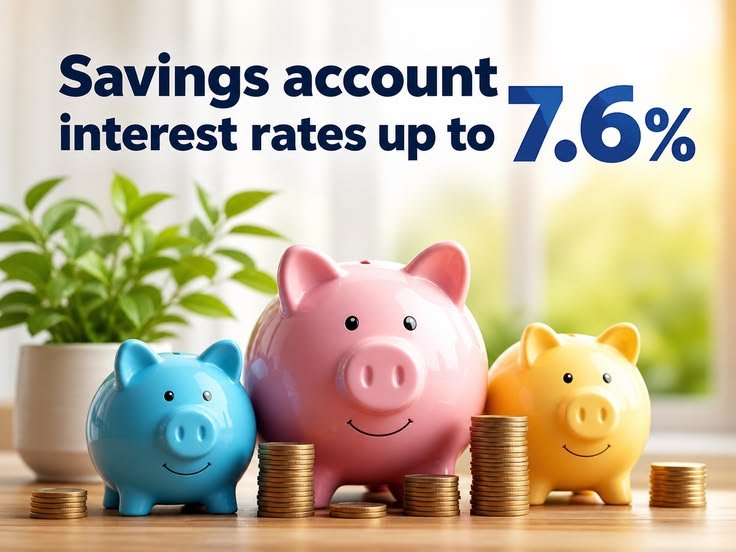
A savings account can be one of the simplest tools for building financial stability. It gives you a place to keep money for emergencies, short-term goals, and future expenses while potentially earning interest.
But choosing a savings account is not as simple as picking the bank that advertises the highest interest rate.
Two accounts may offer similar rates but have very different fees, minimum balance requirements, withdrawal rules, access options, and other conditions.
The best savings account is the one that fits your financial goals, access needs, and saving habits.
In this guide, we’ll explain what to look for when comparing savings accounts, how interest rates work, which fees to watch for, and how to choose an account that makes saving easier.
Note: Interest rates, fees, minimum balances, withdrawal limits, deposit protection, and account features vary by bank and country. Always review the current terms before opening an account.
What Is a Savings Account?
A savings account is a bank account designed primarily for holding money you don’t need to spend regularly.
People commonly use savings accounts for:
- Emergency funds
- Short-term financial goals
- Vacation savings
- Education expenses
- Large purchases
- Home or vehicle savings
- General cash reserves
Unlike an everyday checking account, a savings account is generally intended to encourage you to keep money aside.
Many savings accounts also pay interest on your balance.
For example, if you deposit $5,000 into an account that earns interest, the bank may pay you based on the account’s applicable interest rate and terms.
Why Does Choosing the Right Savings Account Matter?
It may seem like all savings accounts are basically the same.
They’re not.
One account might offer:
- A higher interest rate
- No monthly maintenance fee
- Easy digital access
Another might offer:
- A lower interest rate
- A minimum balance requirement
- Limited withdrawals
- Branch access
- Additional banking services
The difference can become meaningful as your balance grows.
For example, imagine two accounts:
Account A: 1% annual interest
Account B: 3% annual interest
If you keep $10,000 in the account for a year, a simplified calculation gives:
Account A: $10,000 × 1% = $100
Account B: $10,000 × 3% = $300
The actual amount earned can differ because of compounding, changing rates, taxes, fees, and account terms.
The lesson is simple:
Don’t choose a savings account based on the bank’s name alone. Compare the numbers and conditions.
1. Compare the Interest Rate
The interest rate is one of the most important factors when choosing a savings account.
A higher rate can help your money grow faster without requiring additional deposits.
However, don’t automatically choose the account with the highest advertised rate.
Ask:
- Is the rate ongoing or promotional?
- Is it variable?
- Is there a minimum balance?
- Is the rate available on the entire balance?
- Are there eligibility requirements?
- Can the bank change the rate?
- Are there fees that reduce the benefit?
Interest Rate vs. APY
Depending on the country and financial institution, you may see terms such as interest rate, annual percentage yield (APY), or similar measures.
APY generally takes compounding into account, making it useful for comparing certain deposit accounts.
When comparing accounts, make sure you’re comparing the same type of rate or yield.
2. Look for Low or No Monthly Fees
A high interest rate isn’t very useful if the account charges large recurring fees.
Suppose your account earns $150 in interest during a year but charges:
$10 per month × 12 = $120
Your $150 interest could effectively be reduced by $120 before considering other factors.
Look for:
- Monthly maintenance fees
- Minimum balance fees
- Excess withdrawal fees
- Transfer fees
- ATM fees
- Account closure fees
- Other service charges
A savings account with a slightly lower rate but no significant fees may sometimes be better than an account with a higher rate and expensive charges.
3. Check the Minimum Balance Requirement
Some savings accounts require you to maintain a minimum balance.
For example:
Minimum balance: $1,000
If your balance falls below that amount, the bank may charge a fee or reduce certain benefits.
If your savings balance is likely to fluctuate, an account with no minimum balance requirement may be more convenient.
Before opening an account, ask:
“What happens if my balance falls below the minimum?”
4. Understand Withdrawal and Transfer Rules
Savings accounts are designed for saving, so some accounts may limit certain withdrawals or transfers.
Rules can vary depending on the bank and jurisdiction.
You may encounter:
- Transaction limits
- Withdrawal fees
- Transfer limits
- Processing restrictions
- Different rules for ATM and electronic withdrawals
If you expect to access your savings frequently, make sure the account allows the level of access you need.
5. Consider How Quickly You Can Access Your Money
Savings are useful only if you can access them when you need them.
This is especially important for an emergency fund.
Check:
- How long transfers take
- Whether you can transfer money instantly
- ATM availability
- Branch availability
- Weekend processing
- Transfer limits
For emergency savings, you generally want an account that provides reasonable access without unnecessary complications.
6. Check Deposit Protection
Before depositing significant savings, understand how deposits are protected in your country.
Some countries have government-backed or legally established deposit insurance systems that protect eligible deposits up to specified limits.
The rules vary.
Check:
- Whether the bank participates in the relevant deposit-protection system
- What types of accounts are covered
- Maximum protected amounts
- Whether protection applies per customer, account, or institution
- Any applicable conditions
Don’t assume every financial institution has identical protection.
7. Compare Online and Branch Access
Think about how you prefer to manage your money.
Online Savings Account
May offer:
- Mobile banking
- Online statements
- Easy transfers
- Digital account management
- Potentially competitive rates
Branch-Based Savings Account
May offer:
- Face-to-face assistance
- Cash services
- Physical branch access
- Other traditional banking services
Neither is automatically better.
Choose the setup that matches your habits.
8. Evaluate the Mobile App and Online Banking
If you plan to manage your savings digitally, the bank’s online platform matters.
Look for features such as:
- Balance tracking
- Easy transfers
- Transaction history
- Account statements
- Security alerts
- Biometric login where available
- Card management
- Customer support
A high interest rate won’t feel attractive if the account is difficult to manage.
9. Check Automatic Savings Features
Some banks allow you to automate transfers from your checking account into savings.
For example:
Monthly income → Checking account → Automatic $300 transfer → Savings account
If you save $300 every month:
$300 × 12 = $3,600 per year
This doesn’t include interest.
Automatic saving can make it easier to build savings because you don’t have to remember to transfer money manually.
10. Consider the Account’s Purpose
Before choosing an account, identify what you’re saving for.
Different goals may have different requirements.
Emergency Fund
Prioritize:
- Safety
- Easy access
- Low fees
- Reliable banking access
Short-Term Purchase
Prioritize:
- Competitive interest
- Easy access
- Low fees
Long-Term Cash Reserve
You may care more about:
- Interest rate
- Deposit protection
- Account stability
- Fees
- Accessibility
Knowing your goal makes comparing accounts easier.
High-Yield Savings Accounts
A high-yield savings account generally refers to a savings account offering a relatively competitive interest rate compared with standard savings accounts.
These accounts can be useful when you want to keep cash accessible while earning interest.
However, “high-yield” does not mean risk-free in every respect or that the rate will remain high forever.
The rate may change.
Before opening one, check:
- Current rate
- Whether the rate is variable
- Minimum balance
- Monthly fees
- Withdrawal rules
- Deposit protection
- Access to funds
- Promotional conditions
Fixed or Variable Interest Rates?
Savings account rates can work differently depending on the account.
Variable Rate
The bank may change the rate over time.
If rates increase, you may earn more.
If rates decrease, you may earn less.
Fixed Rate
Some deposit products may offer a fixed return for a specific period.
These products may have different withdrawal restrictions and terms from ordinary savings accounts.
Make sure you understand whether you’re opening a flexible savings account or a product where your money is committed for a specific period.
How Much Money Should You Keep in a Savings Account?
There is no single correct amount.
Your savings target depends on:
- Monthly expenses
- Income stability
- Debt
- Dependents
- Upcoming expenses
- Emergency needs
- Financial goals
A common starting point is to build an emergency fund gradually.
You could use milestones:
$500 → $1,000 → One month of essential expenses → Several months of essential expenses
The right target depends on your circumstances.
The important thing is to start with an amount you can realistically maintain.
Savings Account vs. Checking Account
A checking account and savings account serve different purposes.
| Feature | Checking Account | Savings Account |
|---|---|---|
| Everyday spending | Excellent | Usually not the main purpose |
| Bill payments | Common | May be limited |
| Interest | Often low or none | Often higher |
| Saving goals | Less suitable | Excellent |
| Emergency fund | Possible | Common choice |
| Frequent transactions | Designed for them | May have restrictions |
| Debit card | Common | Depends on account |
| Main purpose | Spending | Saving |
For many people, using both accounts creates a simple financial system.
Checking = money for now
Savings = money for later
How to Compare Two Savings Accounts
Suppose you’re comparing two accounts.
| Feature | Account A | Account B |
|---|---|---|
| Interest rate | 2.5% | 3.0% |
| Monthly fee | $0 | $5 |
| Minimum balance | $0 | $1,000 |
| Online access | Yes | Yes |
| Transfer access | Easy | Limited |
| Deposit protection | Applicable | Applicable |
At first glance, Account B has the higher interest rate.
But the $5 monthly fee costs:
$5 × 12 = $60 per year
If your balance is small, the additional interest may not compensate for the fee.
This is why you should compare the total value of the account, not one number.
A Simple Way to Compare Savings Accounts
Use this formula:
Net Benefit = Interest Earned − Account Fees
For a simplified example:
Account A:
- Interest: $250
- Fees: $0
- Net benefit: $250
Account B:
- Interest: $300
- Fees: $60
- Net benefit: $240
Account A would produce the higher net benefit in this simplified example, even though Account B advertises the higher interest rate.
Actual returns depend on balance changes, compounding, taxes, and account terms.
Should You Move Your Existing Savings to a New Account?
Sometimes moving your savings can make sense.
You may consider switching if:
- Your current rate is no longer competitive
- Your bank introduced new fees
- Another account has better access
- Your financial goals changed
- Your current account has unnecessary restrictions
But don’t switch based only on a headline rate.
Check the complete terms first.
How to Open a Savings Account
The process varies by bank and country, but it commonly involves:
Step 1: Compare Accounts
Review rates, fees, access, and requirements.
Step 2: Check Eligibility
Confirm that you meet the account’s requirements.
Step 3: Provide Required Information
The bank may require personal and identity information according to applicable regulations.
Step 4: Fund the Account
Some banks may require an initial deposit.
Step 5: Set Up Digital Access
Activate online or mobile banking if available.
Step 6: Automate Savings
If appropriate, create a recurring transfer to build your savings consistently.
TechLighta’s Savings Account Checklist
Before opening a savings account, ask:
Interest
- What interest rate does the account currently offer?
- Is the rate variable?
- Is the advertised rate promotional?
- Does the rate apply to my entire balance?
- How often is interest calculated and credited?
Fees
- Is there a monthly maintenance fee?
- Is there a minimum balance requirement?
- Are there withdrawal fees?
- Are there transfer fees?
- Are there ATM fees?
- Are there other account charges?
Access
- Can I access the account through a mobile app?
- Can I transfer money easily?
- Are withdrawals restricted?
- Are ATMs available?
- Are branches available if I need them?
Security and Protection
- Is the bank covered by the applicable deposit-protection system?
- What are the protection limits?
- Does the bank offer multi-factor authentication?
- Can I set transaction alerts?
Overall
- I understand the account terms.
- I compared other banks.
- The account fits my savings goal.
- The fees are acceptable.
- I can access the money when needed.
TechLighta’s Savings Account Comparison Worksheet
Use this worksheet before making your final decision.
| Feature | Bank A | Bank B | Bank C |
|---|---|---|---|
| Current interest rate | |||
| APY/yield, if applicable | |||
| Monthly fee | |||
| Minimum balance | |||
| Withdrawal rules | |||
| Transfer limits | |||
| ATM access | |||
| Branch access | |||
| Mobile app | |||
| Online banking | |||
| Deposit protection | |||
| Promotional rate | |||
| Other fees |
My Final Evaluation
Best interest rate: __________
Lowest fees: __________
Best access: __________
Best for my emergency fund: __________
Best overall account: __________
Reason: __________________________________
Common Mistakes When Choosing a Savings Account
Choosing Only the Highest Rate
A high rate is useful, but it isn’t the only factor.
Always check fees, restrictions, and conditions.
Ignoring Promotional Rates
Some advertised rates may only apply for a limited period or under specific conditions.
Find out what happens after the promotional period ends.
Keeping Too Much Money in a Low-Interest Account
If you’re holding a significant cash balance and your current account pays little interest, compare other suitable options.
Ignoring Accessibility
An account with a great rate may not be useful if accessing your money is difficult when you need it.
Not Reading the Fee Schedule
Small charges can reduce your savings over time.
Understand the fees before opening the account.
Forgetting About Deposit Protection
Before depositing a large amount, understand whether and how your money is protected under the relevant deposit-insurance system.
When Should You Review Your Savings Account?
You don’t need to check competing accounts every day.
However, it can be useful to review your account periodically and whenever something changes.
Consider reviewing it when:
- Your interest rate changes
- Your bank introduces new fees
- Your savings balance grows significantly
- Your financial goal changes
- You need easier access
- Another suitable account offers materially better terms
A yearly review can be a simple starting point.
Frequently Asked Questions
What is the best savings account?
There is no single best savings account for everyone. The right account depends on your interest rate, fees, access needs, financial goals, and the bank’s terms.
Should I choose the savings account with the highest interest rate?
Not automatically. Compare the interest rate with fees, minimum balances, withdrawal restrictions, access, and other conditions.
What is a high-yield savings account?
A high-yield savings account generally offers a relatively competitive interest rate compared with standard savings accounts. Rates and terms can change, so review the current conditions.
Is it safe to keep money in a savings account?
Savings accounts at regulated financial institutions may be protected by applicable deposit-insurance or deposit-protection systems, subject to eligibility and limits. Check the rules that apply in your country.
Can I have more than one savings account?
In many cases, yes. Multiple savings accounts can help separate different goals, such as emergency savings, travel, education, or a major purchase.
Should my emergency fund be in a savings account?
A savings account is often suitable for emergency savings because it can keep the money separate from everyday spending while allowing relatively easy access.
How much should I save each month?
There is no universal amount. Start with an amount that fits your income and expenses. Even a small, consistent contribution can help you build savings over time.
Can a savings account lose money?
Your account balance can be affected by fees, withdrawals, taxes where applicable, or other account conditions. In addition, inflation can reduce the purchasing power of your savings over time.
How often should I compare savings accounts?
Consider reviewing your account periodically, particularly when rates, fees, or your financial circumstances change.
Final Thoughts
Choosing a savings account should be about more than finding the biggest advertised interest rate.
Look at the complete picture:
Interest rate + fees + access + restrictions + deposit protection + convenience
A good savings account should help your money grow while keeping it reasonably accessible for the purpose you have in mind.
For an emergency fund, prioritize safety, access, and low fees. For a short-term goal, compare the rate and accessibility. For a larger cash balance, pay particular attention to the interest rate, deposit-protection limits, and account conditions.
Most importantly, don’t let the search for a “perfect” account stop you from saving.
Start with a suitable account, automate your contributions when possible, and review your choice periodically as your financial situation changes.
Disclaimer: This article is for general educational purposes and is not financial, banking, or investment advice. Savings account rates, fees, eligibility requirements, withdrawal rules, deposit-protection systems, and consumer protections vary by country, bank, and account type. Always review the current terms and conditions provided by the financial institution before opening or switching an account.